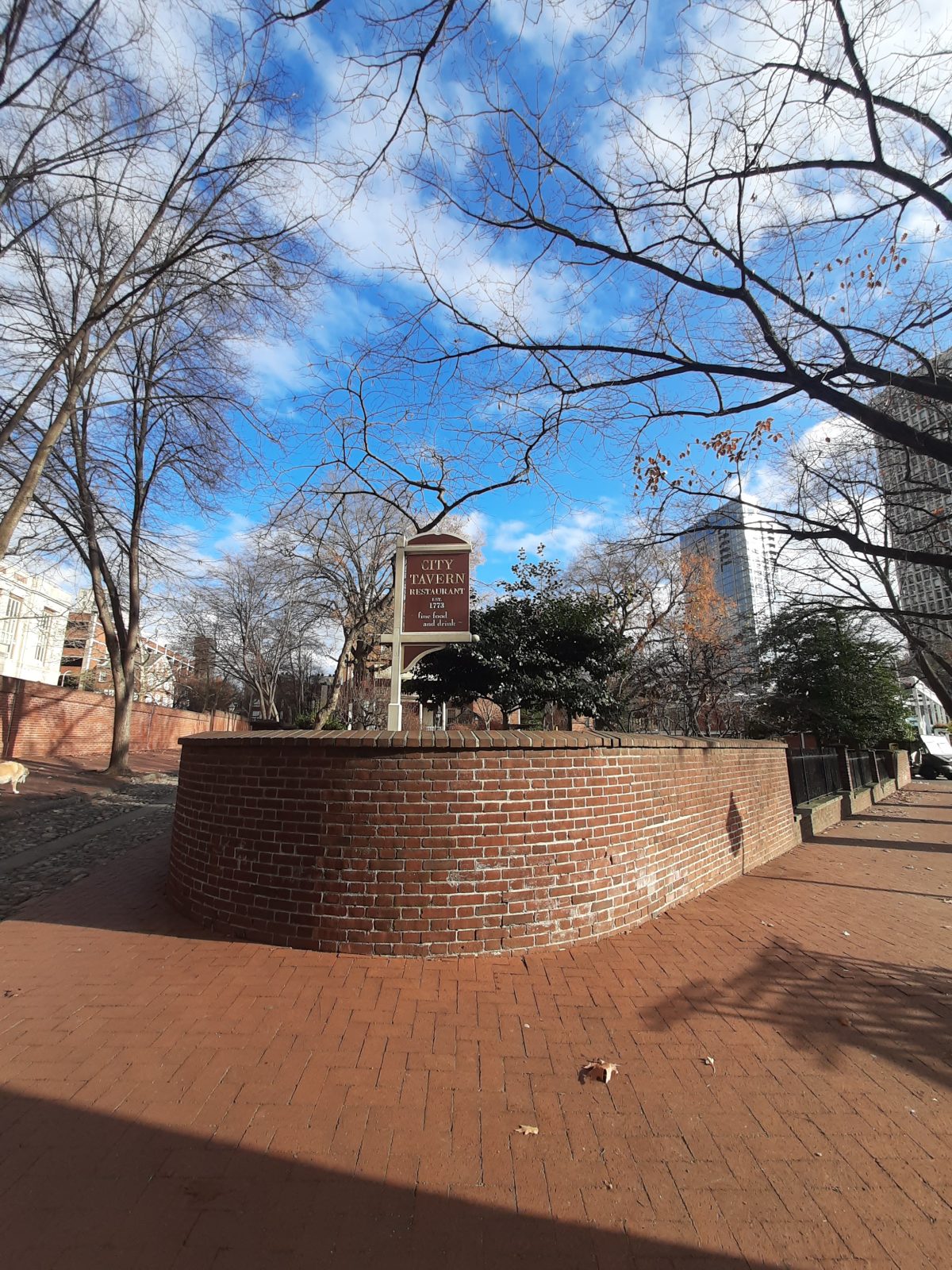
City Tavern in Philadelphia, the tavern where Washington, Franklin, and other Founding Fathers once gathered. A simple place, yet full of history — where independence was born over dinners and conversations.
In the historic heart of Philadelphia stands the City Tavern, a place steeped in history that first opened its doors in 1773. More than just a tavern, it served as a gathering place for the great minds of the American Revolution. Within its walls, George Washington, John Adams, Thomas Jefferson, Alexander Hamilton, and Benjamin Franklin came together to share ideas, plans, and debates that would ultimately shape the birth of the United States.
John Adams once described it as “the most genteel tavern in America.”


The City Tavern was born out of a very practical need: Philadelphia was growing rapidly, and the famous London Coffee House had become too small to host the meetings of merchants, captains, and politicians. A group of influential merchants therefore decided to build a new venue on Second Street — larger and more refined. From the very beginning, it became a vibrant center of social and economic life: business deals were sealed, dances and banquets were held, and the most important meetings of Philadelphia’s elite took place within its walls.

His role in history was cemented in September 1774, when the delegates of the First Continental Congress were welcomed with a banquet in its halls. That dinner marked the beginning of an inseparable bond between the tavern and the revolutionary ideals. It is said that many of the informal conversations held around its tables — accompanied by wine, beer, or rum of the time — helped build the trust among the future Founding Fathers. In an era without official dispatches or rigid protocols, ideas flowed more freely between toasts and shared dishes.

For almost half a century, the tavern was the true heart of the city. It was a place frequented not only by politicians, but also by travelers, writers, musicians, and ordinary citizens who wished to be part of its vibrant atmosphere. Within its walls, news arriving from Europe mingled with colonial rumors and the hopes of a new nation still in the making.
The original building was destroyed by a devastating fire in 1834, and for more than a century it lived on only in Philadelphia’s collective memory. However, its legacy was so significant that in 1976, as part of the United States Bicentennial celebrations, a faithful replica was erected on the same site. This new City Tavern not only recreated the 18th-century architecture but also its cuisine. For decades, visitors could enjoy historical recipes inspired by the menus of Washington and Jefferson, reliving a piece of the past through gastronomy.
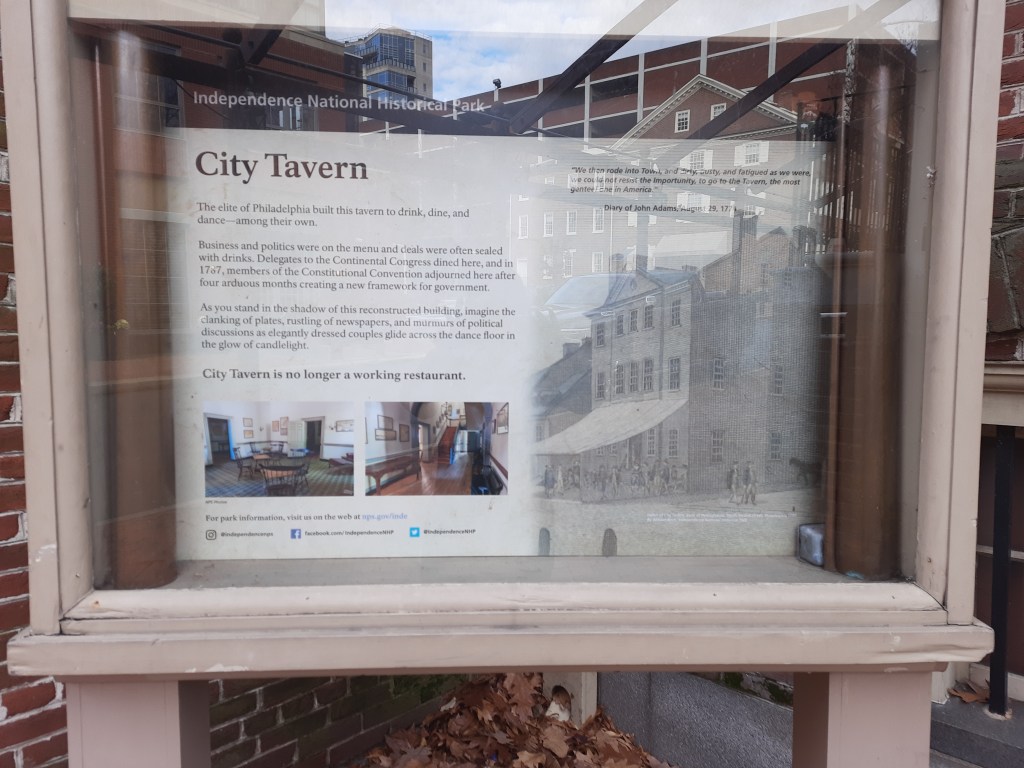
Although the tavern permanently closed its doors as a restaurant in 2020, its spirit remains alive. For those who wander through the historic district today, the City Tavern sign stands as a reminder that great revolutions can also take shape around a shared table. Beyond its walls, the lesson endures: even the most transcendent moments in history are often born in everyday gathering places, where friendship and dialogue become the true engines of change.
📌 Curiosities and highlights
- 🍽️ 🍽️ Historical Banquet: On September 5, 1774, the tavern hosted the welcome dinner for the First Continental Congress.
- 🍷 Cup in Hand: Benjamin Franklin was a regular visitor, and it is said that he shared some of his most famous toasts there.
- 🏛️ Social Center: In addition to political debates, the tavern hosted dances, concerts, and banquets that brought together the entire Philadelphia elite.
- 🔥 A fire erased it: The original building was destroyed in 1834 and remained absent for more than a century.
- 🎉 Bicentennial Renaissance: In 1976, it was faithfully rebuilt to commemorate the nation’s 200th anniversary.
- 🕯️ Gastronomy of the past: For decades he offered menus inspired by 18th century recipes, including favorite dishes from Washington and Jefferson.
- 🚪 Recent Closure: The tavern permanently closed in 2020, yet it remains an icon of the historic district.
Sources


Leave a Reply