
Humantay Lake, located in the Peruvian Andes near Cusco at more than 4,200 meters above sea level, is one of Peru’s most breathtaking natural landscapes. Its turquoise waters, fed by glacial melt from the Andean peaks, make this place feel almost unreal. It is a destination where history, Andean legends, and science come together amid a dreamlike landscape.
This mirror of water, with its intense turquoise hues, captivates not only for its natural beauty but also for its cultural significance and ecological importance. Since ancient times, the lake has been revered by local communities as a sacred place, deeply connected to traditions and myths that seek to explain its origin.
Humantay Lake is much more than a tourist attraction; it is a living testament to the connection between nature and the cultures that have inhabited these lands for centuries.
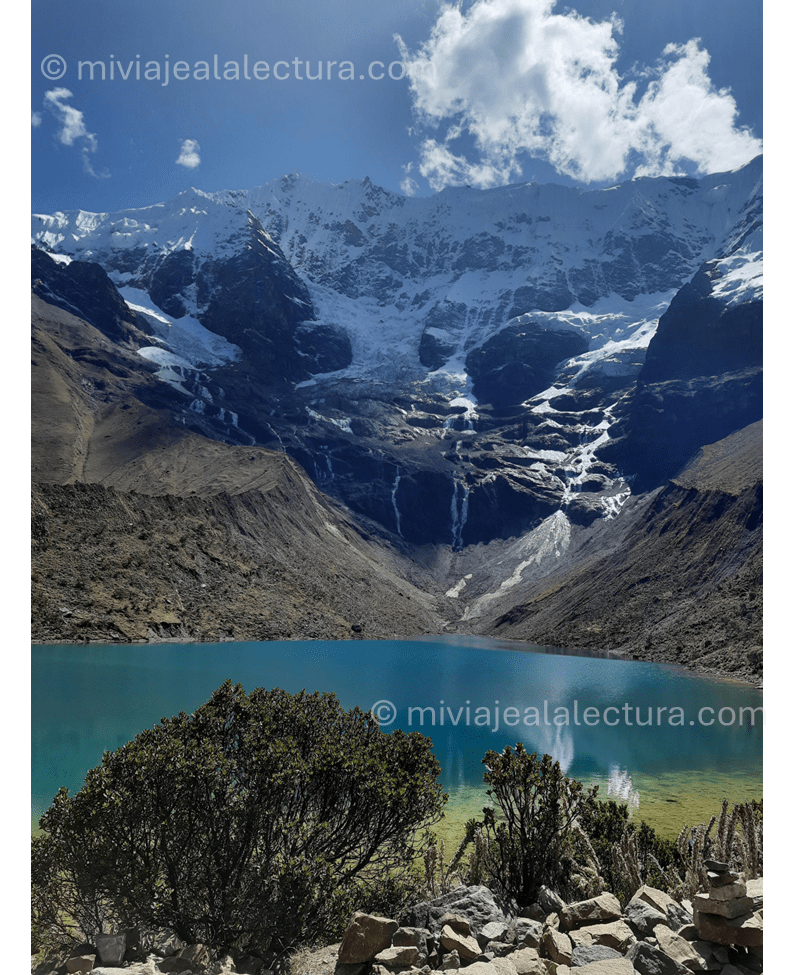
Located in the majestic mountains of the Peruvian Andes, Humantay Lake brings together layers of meaning shaped by both nature and human presence over time. It is a place where geography and cultural memory intersect, offering a deeper understanding of the relationship between landscapes and the people who have lived alongside them for generations. More than a destination, it invites reflection on how natural spaces become part of collective identity and meaning.
Humantay Lake Quick Facts
- 💧 Famous for: The turquoise color of its waters
- 📍 Location: Cusco, Peru
- ⛰ Altitude: about 4,200 m s. no. m.
- 🚶 Hike: Short High Mountain Trekking
- 🌤 Best time to visit: dry season (April to October)

The Legend of Humantay Lake
This place couldn’t be exempt from its legend, and like many stories of nature, this one also tells of a failed love. It is that pure, eternal, yet impossible love that transforms into something beautiful, visible to all, but always unattainable for the hearts that long for it.
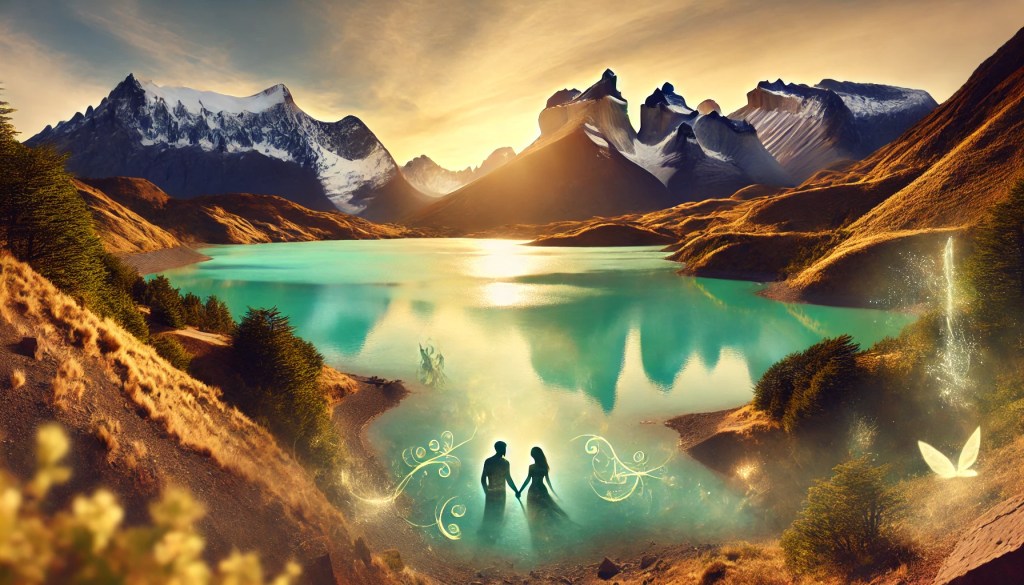
Legend tells that, in a village affected by famine, two brothers, Salkantay and Ausangate, decided to part ways in search of food in distant lands. Salkantay traveled north, while Ausangate headed south. Both managed to find the resources needed to save their people, but during his journey, Salkantay fell in love with the goddess Veronica. This love, though deep, was impossible, as his duty as a leader forced him to return to Cusco. According to tradition, Salkantay and Ausangate were transformed into majestic snow-capped peaks to protect the region. Salkantay’s tears, born from his sorrow, gave rise to the breathtaking Humantay Lake. Its turquoise waters remain a symbol of love, sacrifice, and connection with the land.

Why Humantay Lake is turquoise: a scientific explanation
From a scientific perspective, the history of Humantay Lake dates back thousands of years. Its origin lies in the melting of the Humantay Glacier, and its dazzling turquoise color is the result of minerals carried by glacial waters. But who does it harm to embellish perfection with a touch of literature? Isn’t that precisely what poetry does?
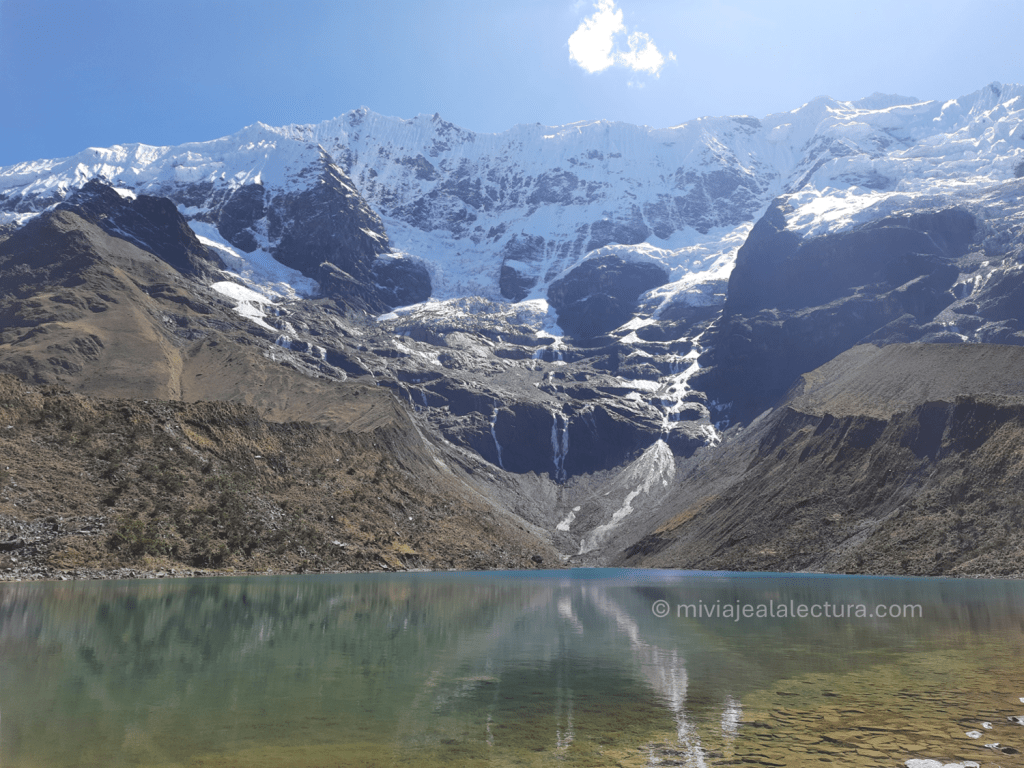
The Historical Importance of the Humantay Lake
The Inca Empire, also known as Tahuantinsuyo, was an expansive state that covered the Andes Mountains and parts of what are now Colombia, Peru, Ecuador, Bolivia, Chile, and Argentina, reaching its peak in the 15th century.1.
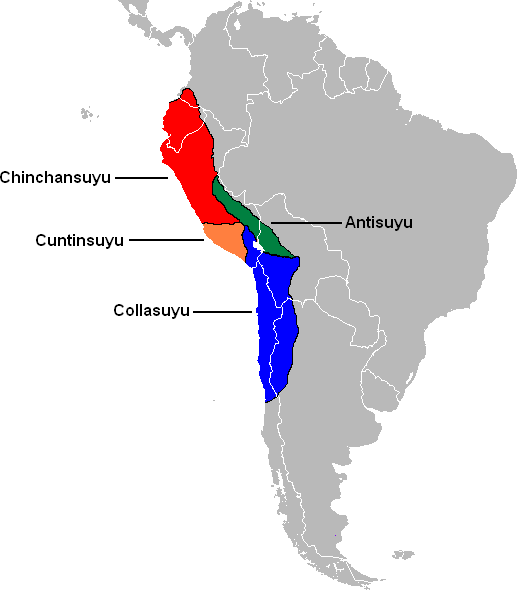
Tahuantinsuyo: Chinchaysuyo (in red), Antisuyo (in green), contisuyo (in orange) and COLLASUYO (in blue). CC BY-SA 3.0. https://es.wikipedia.org/wiki/Suyos_del_Imperio_incaico.
Nature as a Sacred Force
Humans saw nature as sacred, inhabited by divine forces that had to be revered and respected in order to maintain the balance and harmony of the world. They lived in a geographically diverse region, ranging from the heights of the Andes to the coasts and the Amazonian jungles. Agriculture was the foundation of their economy and depended heavily on land, water, the sun, and other natural elements. Therefore, they worshipped deities that represented these essential forces of life, such as Inti (the Sun), Pachamama (Mother Earth), and the Apus (the mountain spirits)2.

Humantay Lake was a sacred place for the Incas, as the region where it is located was part of a network of roads and strategic settlements within the Inca Empire. The mountains, known as Apus, were revered as protectors and givers of life. For this reason, these sites became centers of rituals and offerings, which at times included human sacrifices dedicated to the Andean deities.3.

Richard L. Kagan, professor emeritus at Johns Hopkins University, stated: “As a historian, I believe it is a mistake to judge the past with the values and norms of today. I also oppose efforts to rewrite history in this sense. Instead, in my opinion, it is better to explain the past in all its complexity than to try to erase it‘4.
Warning:
This entry should not be considered an academic source or in-depth research. It is a brief, personal review based on a place that interested me and that I wanted to learn a little more about. For more accurate and detailed information, it is recommended to consult specialized sources.
- https://historia.nationalgeographic.com.es/a/imperio-incas_18661 ↩︎
- https://www.intupacusco.com/cosmovision-andina/?utm_source=chatgpt.com ↩︎
- https://blog.incarail.com/es/laguna-humantay-como-llegar-altitud-y-curiosidades/ ↩︎
- https://www.hispaniccouncil.org/es-un-error-juzgar-el-pasado-con-los-valores-y-normas-de-hoy/ ↩︎
Explore more reflections and details about Humantay Lake in my other posts.
Humantay Lake: “Being happy does not mean always smiling or constantly thinking positively”

Leave a Reply