
Beginning the Journey: Exploring Philadelphia on Foot
One of the things I appreciated most during my stay in Philadelphia was how easy it was to explore the city on foot. Its walkable streets, efficient public transportation, and pedestrian-friendly design make it possible to enjoy the city without needing a car. It feels only natural to begin this series with Elfreth’s Alley.
I visited Philadelphia alone, in winter. It was a quiet, reflective, and deeply rewarding experience. This post is the first in a series about places I discovered during a morning walk through the city. Each stop offers a small glimpse into what I experienced and learned while exploring Philadelphia’s rich history.
To guide my walk, I used a VoiceMap tour called The Road to Revolution: A Colonial Philadelphia Walking Tour. This self-guided experience takes about two hours and is ideal for travelers who prefer to explore at their own pace—or, as in my case, for those traveling alone.
This was my complete walking route through Philadelphia.
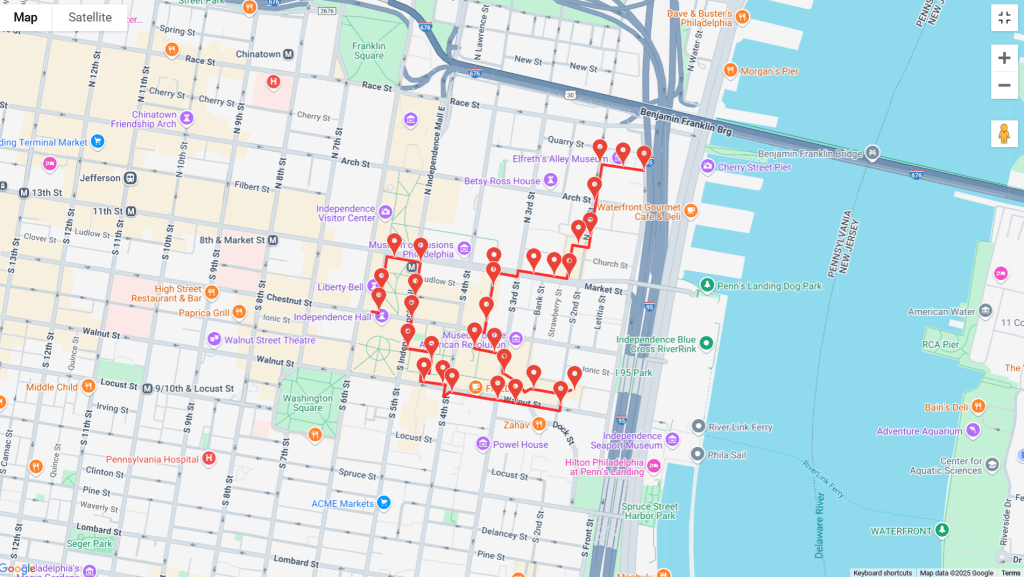
The Starting Point: Elfreth’s Alley
Elfreth’s Alley is the oldest continuously inhabited residential street in the United States. If you would like to include it in your own Philadelphia itinerary, you can find its location on Google Maps.
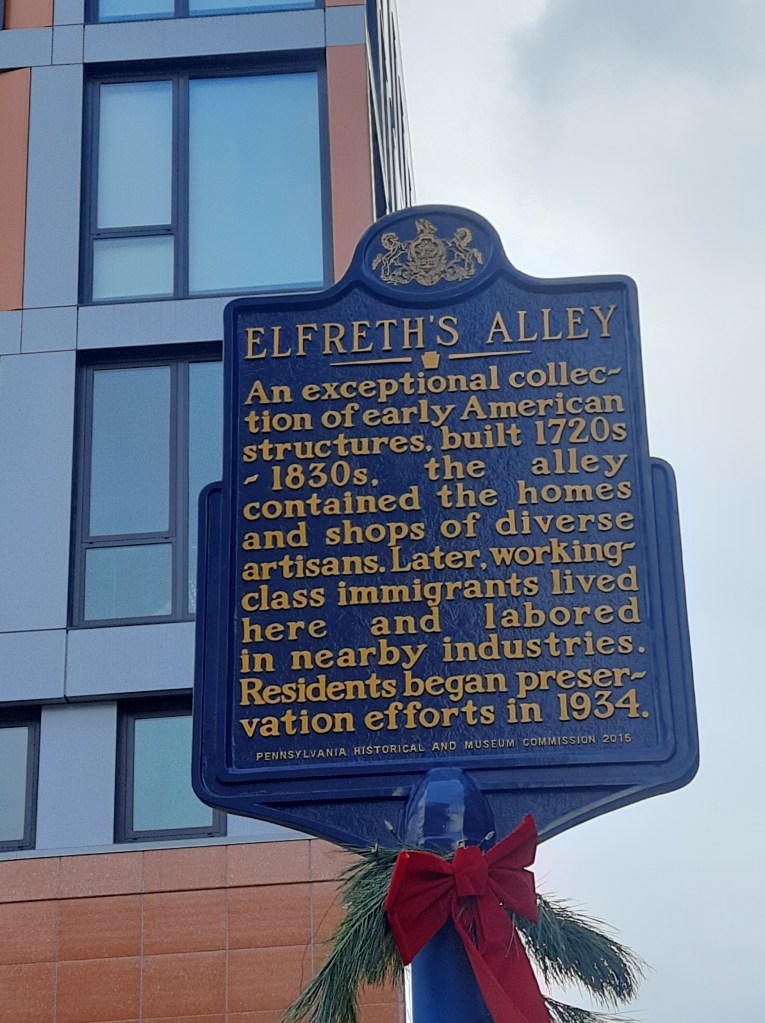
Before continuing my walk along Elfreth’s Alley, I would like to share a little about how Philadelphia came into being.
The Origins of Philadelphia
Philadelphia would not exist without William Penn.
Born in England in 1644, Penn’s life changed when he converted to Quakerism, a faith that faced persecution at the time. Two major events helped shape his vision of what a city should be: the Great Plague of 1665 and the Great Fire of London in 1666, which devastated a city largely built of wood. These experiences influenced his dream of creating a safer and healthier urban environment.
After his father’s death, Penn sought compensation for a substantial debt that King Charles II owed to the Penn family. Rather than receiving money, he requested land in North America. In 1681, he was granted approximately 28 million acres, laying the foundation for what would become Pennsylvania.
A year later, Penn and surveyor Thomas Holme set out to design a city from the ground up. Their vision covered 1,200 acres arranged in a grid of rectangular blocks, with broad streets, public squares, and green spaces. It was a plan designed to avoid the chaos, fires, and disease that plagued many European cities. This is how Philadelphia was born.
That city became Philadelphia.
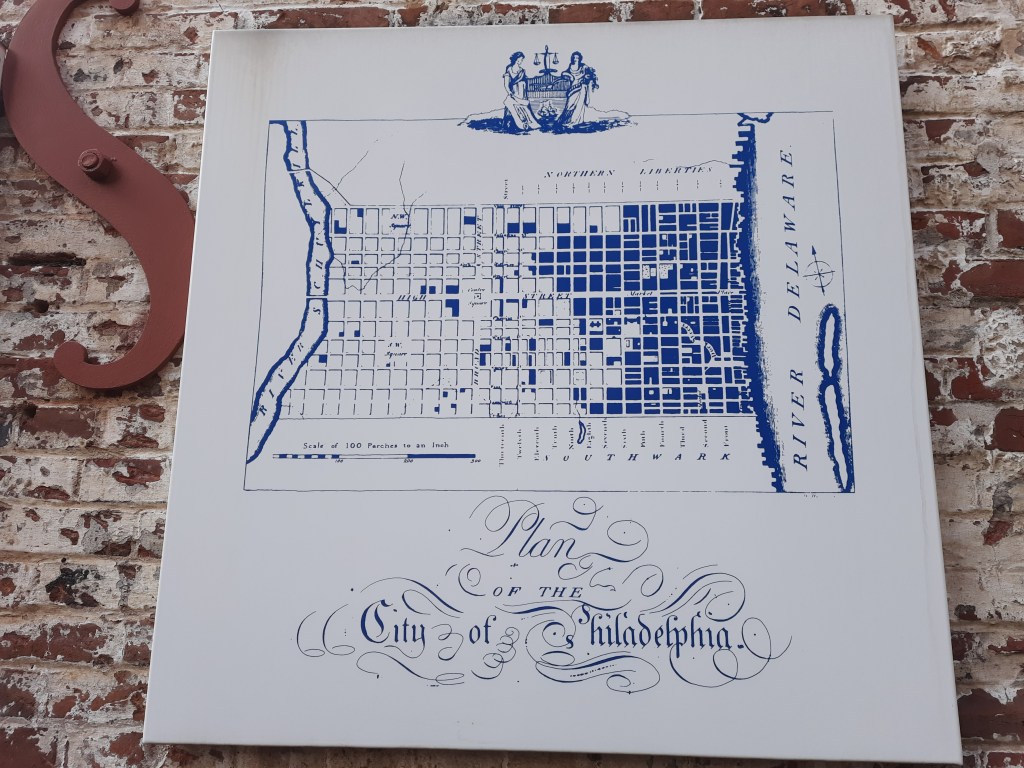
The oldest continuously inhabited residential street in the United States
Elfreth’s Alley was not part of Philadelphia’s original plan.
As the city grew and commerce flourished, artisans and merchants settled near the Delaware River, where ships delivered goods and materials. Population density increased, and property owners recognized the need for additional routes connecting the growing neighborhoods to the waterfront.
In 1703, Arthur Wells and John Gilbert opened a cart path between their properties, creating a passage that linked Front Street and Second Street.
Over time, the alley became known as Elfreth’s Alley, named after Jeremiah Elfreth, a blacksmith and real-estate developer who later owned property in the area.

A Philadelphia Historic Landmark
Elfreth’s Alley has survived not only because of its age but also because of the people who believed in its historical value and fought to preserve it.
Between the 1930s and 1960s, local residents and historians worked tirelessly to protect the alley as an authentic example of colonial Philadelphia. Among them was Dolly Ottey, a resident who became concerned about the deterioration affecting the neighborhood during the early twentieth century.

In 1934, she helped establish the Elfreth’s Alley Association (EAA), whose mission was to preserve this unique corner of the city.
The Association later achieved a major victory when Elfreth’s Alley received National Historic Landmark status. That recognition ultimately helped protect the street from being destroyed during the construction of Interstate 95.
Thanks to those preservation efforts, visitors today can still walk along its cobblestone path and experience a living piece of Philadelphia’s history.


Elfreth’s Alley is a public street that can be visited at any time of day. It is widely regarded as an exceptional example of early American residential architecture, with homes dating from approximately 1720 to 1830.
At houses 124 and 126, visitors can explore the Elfreth’s Alley Museum, which honors the working-class families, artisans, and merchants whose labor helped shape the early United States.
The museum operates seasonally, from April through November, and is currently open on Fridays, Saturdays, and Sundays from noon to 4:00 p.m.
Next stop Betsy Ross and the story of the first American flag.





Leave a Reply